

How Much Protein Should You Eat with Chronic Kidney Disease?
When someone is diagnosed with Chronic Kidney Disease (CKD), one of the most common questions they ask is:
“Do I need to stop eating protein?”
Protein is essential for maintaining muscle, supporting immune function, and keeping the body strong. But when kidney function declines, the amount of protein you eat can influence how hard your kidneys have to work.
The goal is not to eliminate protein , it’s to find the right balance.
Why Protein Matters in Kidney Disease
When your body breaks down protein, it produces waste products that your kidneys filter out of the blood.
Healthy kidneys handle this efficiently. But with CKD, very high protein intake can increase the kidneys’ workload.
That said, protein is still essential — and avoiding it completely can lead to:
• muscle loss
• weakness
• poor nutrition
How Much Protein Do You Need?
For many people with CKD who are not on dialysis, a moderate protein intake is often recommended.
General guideline:
0.6–0.8 grams of protein per kilogram of body weight per day
Example Ranges:
• 150 lbs → ~41–55 grams
• 170 lbs → ~46–62 grams
• 200 lbs → ~55–73 grams
This amount helps support your body while avoiding unnecessary strain on the kidneys.
Are High-Protein Diets Safe?
Many popular diets emphasize very high protein intake, including:
• keto diets
• carnivore diets
• high-protein weight loss plans
These diets can provide more protein than the kidneys may comfortably handle when CKD is present.
Consistently high intake may increase kidney workload over time.
Does the Type of Protein Matter?
Research suggests that protein source may influence kidney health.
Plant-forward eating patterns may:
• produce less metabolic acid
• provide fiber and antioxidants
• support heart health
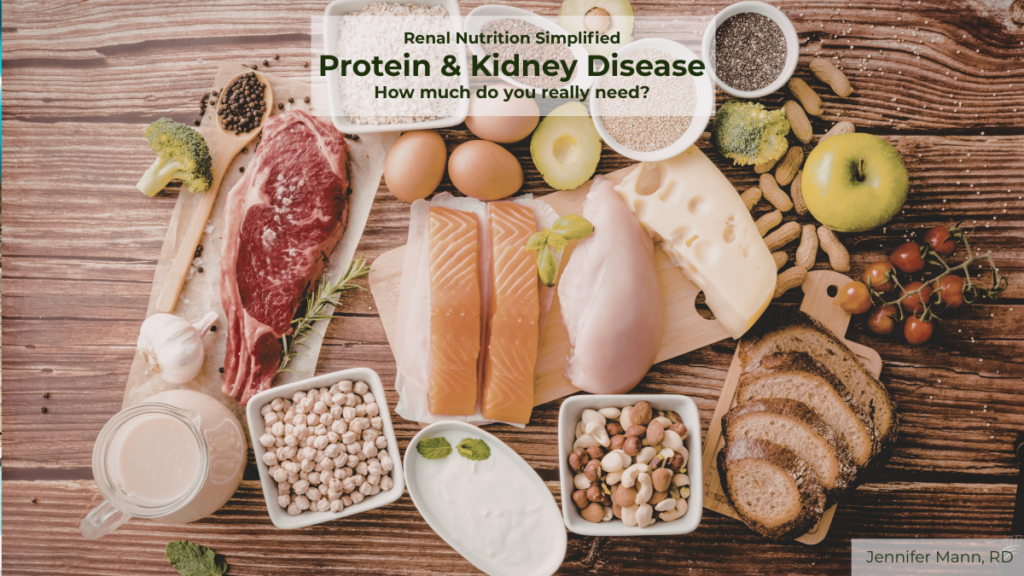
Common Protein Sources:
Animal proteins
• fish
• poultry
• eggs
• dairy
Plant proteins
• beans
• lentils
• nuts
• seeds
• soy foods
A balanced diet often includes a mix of both, while monitoring total intake.
The Most Common Protein Mistake
One of the most common things I see is that people either:
eat far too much protein
or
become afraid of protein and eat too little
Both extremes can cause problems.
• Too much → increased kidney workload
• Too little → muscle loss, fatigue
The goal is balance — not restriction.
Protein Needs Can Change
Protein needs are not the same for everyone.
• Earlier CKD → moderate protein intake
• Dialysis → higher protein needs
This is why nutrition should be individualized.
How a Renal Dietitian Can Help
Working with a Renal Dietitian can help you:
• determine your protein needs
• balance nutrients like sodium and potassium
• build meals without unnecessary restriction
Final Thoughts
Protein is an important part of a healthy diet – even with kidney disease.
The goal is not to eliminate protein, but to find the right balance to support your overall health and kidney function.
Related Articles
• What to Eat with Kidney Disease
• Understanding Potassium in CKD
• How Nutrition Counseling Supports Kidney Health
Need Help Figuring Out What to Eat?
If you have kidney disease and feel unsure about your diet, working with a Renal Dietitian can help you create a plan tailored to your labs, health goals, and lifestyle.


Confused about potassium, protein, sodium, and phosphorus recommendations?
My CKD Starter Guide helps simplify what patients with stage 3 CKD actually need to focus on — without unnecessary restriction.